RING 10010110
completedCooperation

SummaryRichard Wagner’s monumental Der Ring des Nibelungen – a world of power, love, betrayal, downfall, and a place of constant transformation – is curated using artificial intelligence and innovative image-making techniques. Under the title RING 10010110, curator Marcus Lobbes and his team create an experiment in visionary power, with the history of Wagner's Musikdrama taking centre stage in a visual realm that is constantly changing, expanding, reassembling, and contradicting itself. For the first time in the Bayreuth Festival's history, artificial intelligence performs live on stage – not as a character, but as a visual force.
___________________________________________________________
RING 10010110 is a co-operation between the Bayreuth Festival and the Academy for Theatre and Digitality
Following the premiere of RING 10010110 at the Bayreuth Festival, the Academy’s director Marcus Lobbes discusses his role as curator, the controversial reception of the work, and why the Festival’s 150th anniversary is the right moment for AI to perform on stage in Bayreuth. This conversation is the first in a series of interviews with the team behind this reimagined Ring Cycle.
What inspired the collaboration with Bayreuth Festival?
Bayreuth first contacted me in spring 2023, and asked: could we find a technology that would allow us to present the Ring differently on stage? One important reference was the Festival’s previous production of Parsifal (dir. Jay Scheib) which used AR glasses. There was an interest in continuing this tradition of investigating new technologies for the stage, something that goes all the way back to Wagner himself.
Wagner was fascinated by the technological possibilities of theatre. For the first Rheintöchter in 1876, for example, new machinery had to be invented to create something on stage that had not existed before. The Ring’s 150-year history is also a history of changing theatrical technologies, from mechanical machinery to electricity and later projection technologies, light, lasers and contemporary digital systems.
What I find interesting is that this history also includes the inadequacies of new technologies: the fascination when something suddenly becomes possible, but also the frustration when a new technology does not yet do exactly what you want it to do. That tension is very much part of the Wagner cosmos.
At the same time, another question became increasingly important. From the beginning, we were interested in looking back at how the Ring had changed over 150 years: how it had been staged, interpreted and transformed, but also how those interpretations had related to their particular historical moments.
For me, this relationship between theatre and contemporary history is crucial. Productions do not emerge independently of the societies in which they are made. It is not accidental that the Chéreau Ring appeared in 1976, or that Wieland Wagner’s work after the Second World War looked the way it did. Theatre reacts to the realities around it, sometimes immediately, sometimes with a delay, and the history of the Ring in Bayreuth can therefore also be read as a history of changing societies, images and questions.

How did the concept behind RING 10010110 begin to take shape?
In the months after the first call, I spoke to Nils Corte and visited the Festspielhaus in Bayreuth. We discussed possibilities including holography, Pepper’s Ghost, three-dimensional and 2.5D spaces, and whether it might even be possible to bring historical singers or entire ensembles from the Festival’s past back into the theatre. But we also knew that we did not want the audience to wear AR glasses again. The technology had to become part of the stage itself.
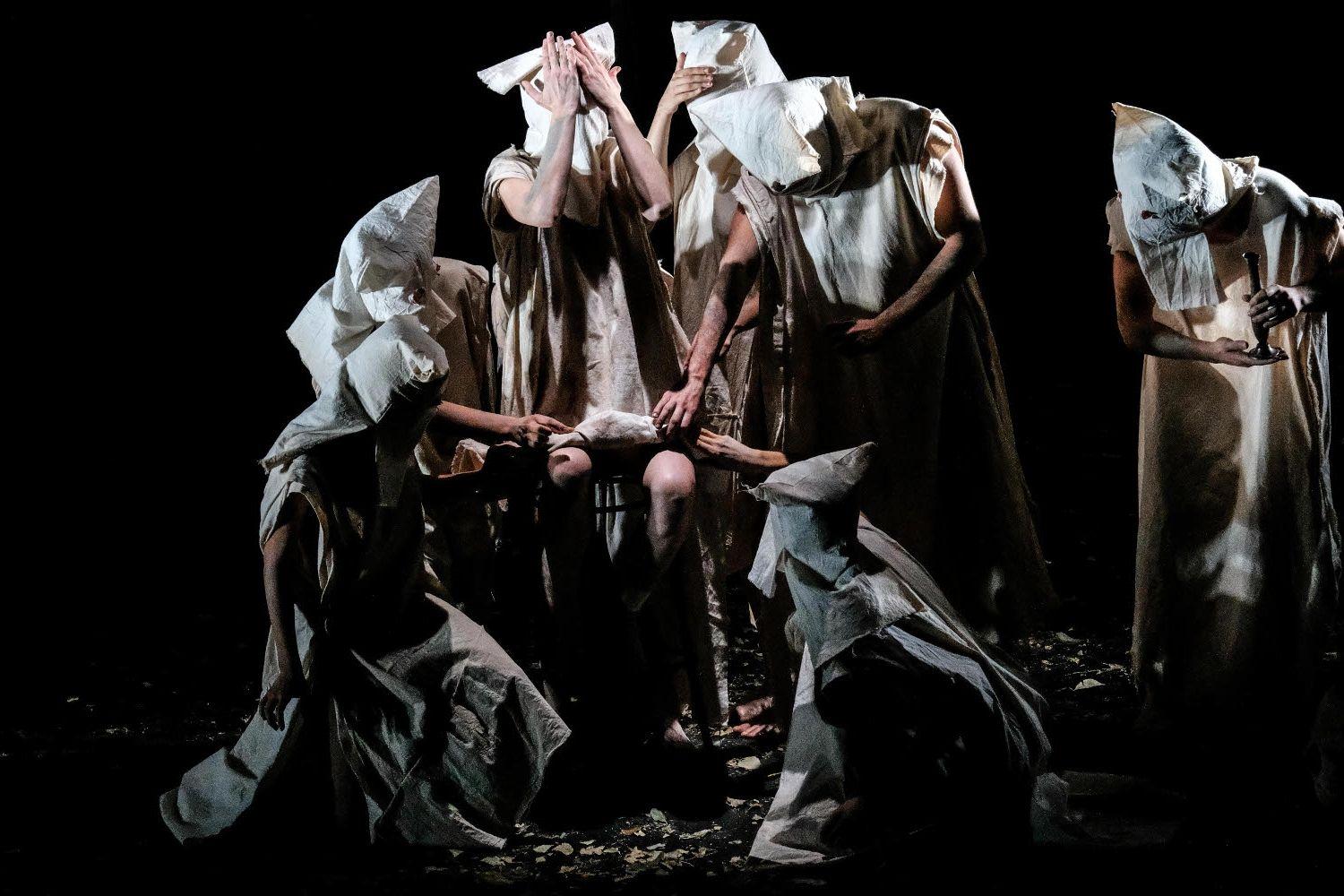
This eventually led us towards the spatial arrangement we have now: projections, transparent surfaces and a kind of parallax space that can produce a holography-like impression without claiming to be holography in the technical sense. Even the costumes, they really feel like art-objects within this musical world.
From here, we came relatively quickly to AI. We did not want to produce a sixteen-hour movie – we could not have done so on a Hollywood scale anyway – and we were not interested in simply placing an ensemble in front of a video wall. For us, that no longer felt particularly exciting or contemporary as a theatrical proposition.
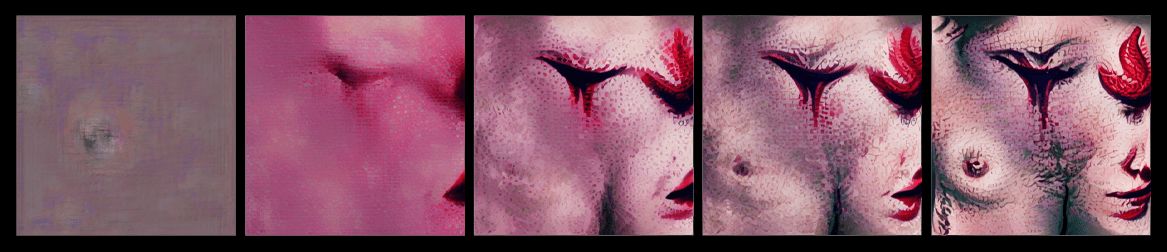
What interested us instead was the possibility of creating a visual system that remains part of the live event: a system that does not simply replay images prepared months in advance, but can transform them in relation to what is happening in the theatre at that particular moment. In that sense, the generative process became interesting to us: the production must have an inner core, and it had to be important that the orchestra are here, the singers are here, that their voices and bodies are here. Every performance must be different.
Even if you ask AI the same question twice, you get two different answers. So I would describe it like this: every night, the Ring is written in other words.


RING 10010110’s generative visuals draw on the Bayreuth Festival’s archives. What was the process of working with this history, and finding new ways to present it – as a “curator” rather than a “director”?
Because the audience in Bayreuth are deeply knowledgeable about the history of the Festival, my first instinct was to explore the stage designs of 150 years of the Ring. I think Wagner is probably the best-documented artist in opera history; the Festival archive is mainly in Villa Wahnfried, where they have all the past stage design models, as well as documents and photos. Andri Hardmeier, our dramaturg, also collected lots of additional material.
From there, the main questions were dramaturgical: What archival materials should we put into the machine, and what not? How should the material be transformed visually? If we place microphones on the singers, and in the orchestra, could the dynamics of their voices shape those visual transformations?
It was clear from the beginning that this project would not be Regietheater, so I thought curator would be a much better title. You know, I’ve done every other artistic job on stage besides conducting, but I never thought about curator before – I love it.
As a team, we built our own version of the Festival’s archive, including hundreds of entries related to the Ring’s wider history in terms of art, politics and music, but also the main topics that the audience might have been talking about in the breaks of these performances, such as the Vietnam War, Hitler, or the assassination of JFK. Often a production of the Ring would have one major headline: it might be the Netflix Ring, or the climate crisis Ring. We decided to put all that information into the machine, so that our Ring would be the Everything Ring.
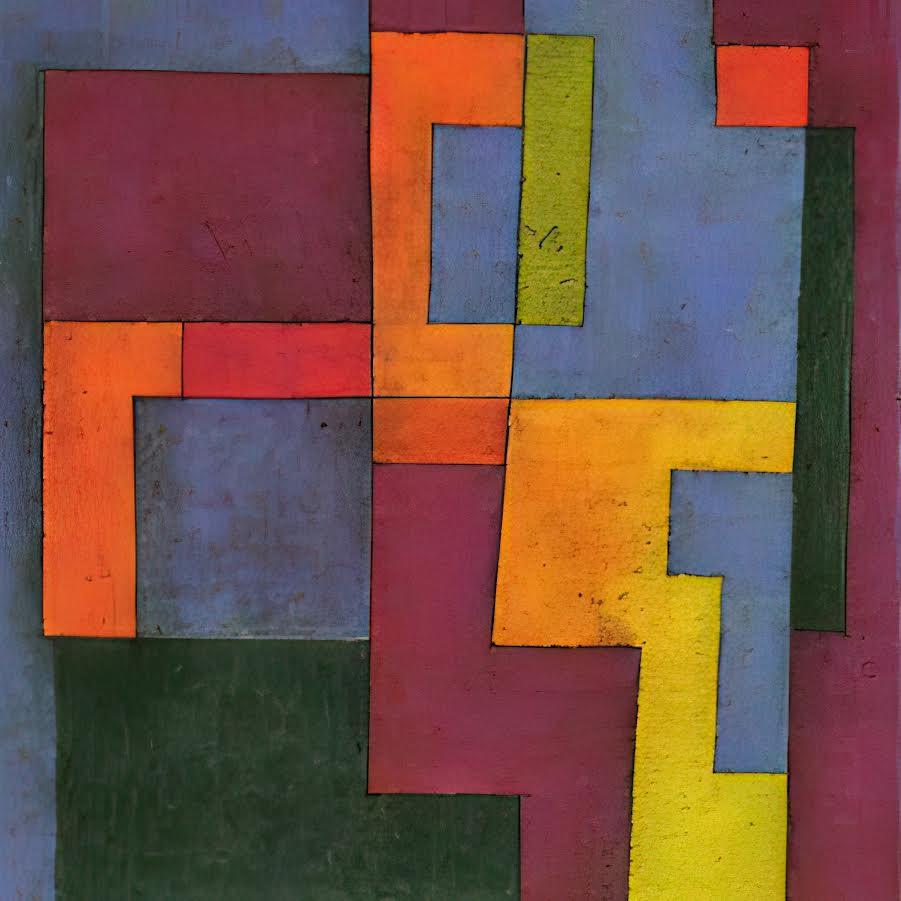
From there, we created something we call a ‘prompt libretto’. This means that we structured the entire Ring with prompts relating to every scene and theme. We decided that each scene should begin with an image from the first production in 1876, and from there the AI-metamorphosis would begin, perhaps jumping to an image from Harry Kupfer’s 1990 production, or to Wieland Wagner’s in 1956.
For us, it was about curating a dramaturgy of scenes from productions which we felt were connected, or which stood in complete contrast from each other – but after that, we didn’t know how the machine would combine them or transform them. Some of the results have been very kitsch, and some have been very atmospheric; it’s always a surprise. And of course there have been some results that I don’t like, but this is just a question of taste. We wanted it to feel like the stage is dreaming about the past 150 years.
What are the challenges of working with new technologies, when the “cutting edge” can change so quickly?
Our biggest fear was that we would arrive in summer 2026 and hear the audience say, “Oh, but this feels so 2025”. With new technologies, you are always chasing after the wave. To be the absolute cutting edge in terms of global technologies we would have needed 20 million euro – but our production is the cutting edge for what a theatre can do, with the resources that a theatre has. It’s state of the art right now, and in a year it will be history.
The results have been surprising, even to our team. We collect data during the performance, from microphones placed on the singers and in the orchestra, and this partially informs the rate of change for the visuals. During the first performance of Das Rheingold the images were changing far too quickly, and we realised it was because the singers were much louder and more intense than during the rehearsal. We tuned it a little, and the audience noticed a big change between Rheingold and Die Walküre.
I was also very surprised to find that often the machine hits the changing point in the music for changing the visual atmosphere. Not every time of course, but it’s brilliant when it happens.


The response from audiences and critics has been strongly divided. Did you expect such an emotional reaction?
I was always really curious about how the audience would receive this performance. It’s like a trance or a trip, a chance to open your mind to your own imagination.
The audience is divided, and it’s a fight between boo and bravo. To be honest, this is what I expected. But at an audience talk, we had lots of people who were really curious, and after two hours I became a friend rather than an enemy. And of course, from my perspective, the audience are allowed to close their eyes and just listen to the music: it is the perfect ensemble, just unbelievable, and naturally they have the loudest applause.
When you’re doing a production and the reviews are bad and the audience doesn’t love it, usually the artistic director will call you and say, “We have to talk.” But in this special case, Katharina Wagner is totally in. She says, “This is what I wanted. We have to fight for it.”
The second person whose opinion we were afraid of was the conductor, Christian Thielemann, but he came to me after the curtain call and said, “It’s fantastic. You have to do this experiment, and you have to do it here, nowhere else. Bayreuth is the place to show something new.”
Reflecting on the debates that it has inspired, why was it important to you, to use AI in RING 10010110?
Our use of AI today is not accidental. AI is one of the technologies fundamentally changing the production and perception of images at this particular historical moment. If we look back at 150 years of the Ring and ask how each period produced its own images and interpretations, then using AI in 2026 also becomes part of that history. The retrospective inevitably becomes a view of the present – and perhaps also of the future.
I would nevertheless be careful about saying that the machine reveals a hidden truth about Bayreuth that human beings could not discover. That would give the machine too much authority. What interests me is that it can reorganise material and establish connections that we did not completely anticipate.
We created the archive, selected the material, constructed the prompt libretto and defined the dramaturgical space in which the system operates. So this is not randomness, and the machine is not an autonomous artist. But within the space we have constructed, we deliberately allow something to happen that we cannot entirely control.
That is why I like the idea that the stage is dreaming about its own history. Dreams do not reproduce memory accurately. They combine things, distort them, exaggerate them and connect moments separated by decades. Sometimes they produce something strangely beautiful, sometimes something kitschy, sometimes something completely wrong.
This is also why Bayreuth is exactly the right place for this experiment. The Festival carries an enormous history with it, but throughout that history it has repeatedly had to ask what the Ring means in the present. RING 10010110 does not try to give one definitive answer to that question. It creates a machine for asking it again every evening.


Artistic Team
Christian Thielemann (Musical direction)
Marcus Lobbes (Curator)
Marcus Lobbes und Nils Corte (Artistic-technical conception)
Andri Hardmeier (Dramaturgy)
Roman Senkl (Digital- and AI-Storytelling)
Nils Corte und Phil Hagen Jungschlaeger (Creative Code/ Visual Art)
Wolf Gutjahr (Stage)
Pia Maria Mackert (Costume)